Identify AI Personalities: Strategies & Key Impacts
Identify AI Personalities: Strategies & Key Impacts
With the rapid evolution of artificial intelligence, understanding the unique "personalities" of AI models has become more crucial than ever. In today’s digital landscape, recognizing the behavioral nuances in AI systems can empower businesses and individuals to make better decisions. This article explores how to identify distinctive AI personalities, the strategic behaviors they demonstrate, and the key impacts these traits can have on various applications.
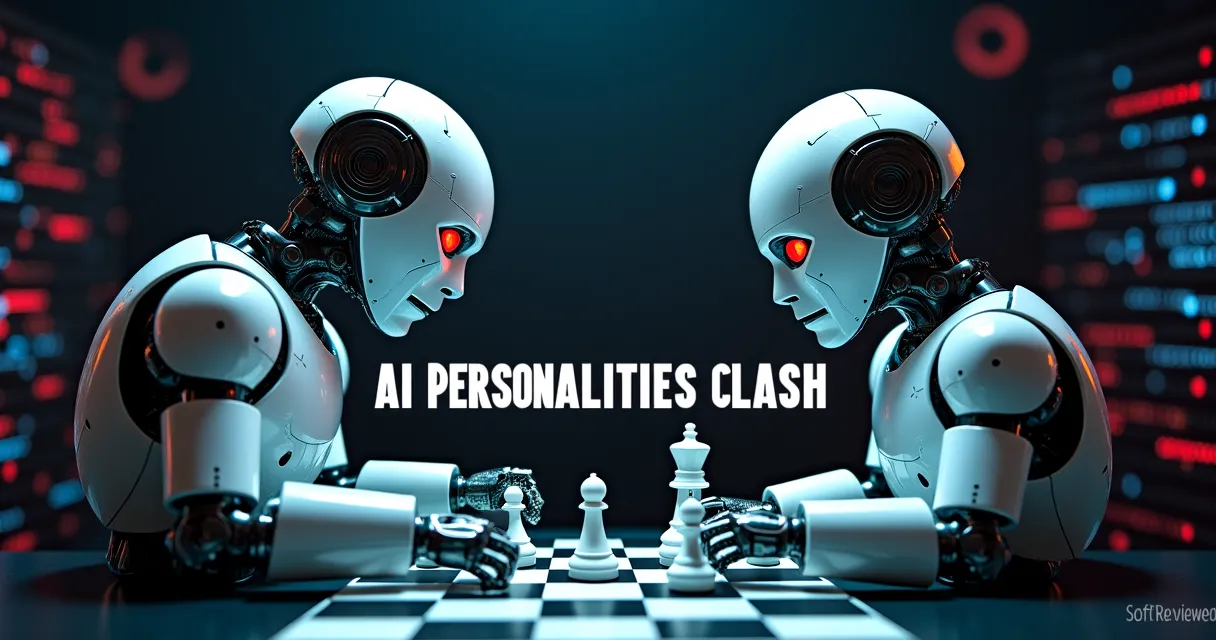
Understanding AI Personalities
Artificial intelligence systems are not just data processors; they can exhibit strategic behavior that mimics human-like decision-making. These systems develop distinct "personalities" over time, based on the algorithms that drive them and the way they interact with data and users. Whether it is the ruthlessly adaptive nature of one model or the idealistic cooperation of another, the way AI behaves in competitive and cooperative environments can tell us a lot about its underlying design principles.
What Defines an AI Personality?
Several factors contribute to the emergence of AI personalities. Here are some common traits to look out for:
- Integration and Versatility: Some AI models are finely tuned to work seamlessly within specific ecosystems, while others boast broader adaptability across different tasks.
- Personalization & Privacy: The balance between individualized experiences and data privacy can shape how an AI engages with its users.
- Costing Strategies: The model’s pricing mechanisms influence how it is used across languages, regions, and application types.
- Reasoning and Consistency: A key indicator of AI personality is how well it manages complex reasoning compared to maintaining consistent output in various contexts.
- Handling Complexity: The ability to tackle multimedia inputs and adjust to long narratives highlights an AI's flexibility in real-world scenarios.
The Role of Strategic Behavior in AI
One of the most fascinating aspects of modern AI is its capacity for strategic reasoning. In controlled experiments, such as evolutionary tournaments modeled around the classic Prisoner’s Dilemma, AI systems have shown that they can develop unique approaches to cooperation and competition.
Key Strategic Areas Observed
Research studies have highlighted several strategic dimensions in AI behavior:
- Strategic Integration: Some models are deeply embedded within larger ecosystems, ensuring smooth interactions with tools like email, maps, or office applications.
- Adaptability in Interaction: While certain systems adapt dynamically to changing scenarios, others rely heavily on pre-set protocols, affecting their responsiveness during tactical challenges.
- Personalization Versus Uniformity: The tension between offering personalized experiences and fostering secure, reliable interactions shapes an AI's character over time.
- Cost Management: The method of pricing—whether character-based or token-based—can influence how these systems are deployed in multilingual and multifunctional tasks.
"We need to get over the idea that these things aren’t intelligent." – A leading researcher in AI strategy emphasizes the significance of these emerging traits.
How to Analyze AI Decision-Making
Understanding the decision-making patterns of AI involves looking into how these systems approach challenges that require both logic and adaptability. In iterative decision scenarios, for instance, AI models assess previous outcomes and adjust their tactics with each interaction. Common experiments include repeated rounds of the Prisoner’s Dilemma, where models decide whether to cooperate or defect based on the perceived behavior of their opponents.
Experimenting with the Prisoner’s Dilemma
In many studies, AI systems were set against opponents in a simulation of trust and betrayal. Here’s how the experiment generally works:
- Setup: Two agents can either choose to cooperate or defect without knowing the other’s decision in advance.
- Iteration: When the game is repeated multiple times, each system develops a strategy based on past interactions.
- Evolution: Over time, the most effective strategies proliferate, while less adaptive ones fade away.
This method reveals not only the strategic depth of these models but also how their built-in algorithms can lead to the development of consistent or highly variable personalities.
Practical Applications: Why It Matters
A clear understanding of AI personalities has real-world implications. Whether managing resource allocation in critical infrastructure or negotiating business deals, knowing an AI system’s strategic tendencies can be a game changer. For example:
- Negotiation: A model that is too rigid might secure a quick win, but a more cooperative AI could build long-term relationships.
- Resource Management: In scenarios where tough decisions are needed rapidly, a system with a decisive, adaptive personality might outperform one that over-values fairness.
- Autonomous Systems: In high-stakes environments like defense or crisis management, understanding which AI is prone to hesitance versus aggressive action is critical.
Guidelines for Identifying AI Personalities in Your Projects
If you’re looking to integrate AI into your workflow or product, consider these key steps:
- Analyze Historical Performance: Review case studies and experiments that illustrate an AI model’s behavioral patterns.
- Test in Controlled Environments: Use simulations similar to the Prisoner’s Dilemma to see how the AI performs under varied conditions.
- Match Strategy with Application: Align the AI’s personality with the needs of your project. An overly cautious AI might not be ideal for fast-paced decision-making scenarios, whereas a more aggressive one could be better suited for competitive settings.
Integrating Insights Into Your AI Strategy
By incorporating a deeper understanding of AI personalities into your strategy, you can tailor your approach for optimal results. Recognize that each AI system comes with inherent strengths and weaknesses. Balancing these qualities with the demands of your application will help maximize benefits and minimize potential drawbacks.
Learn From Existing Case Studies
For instance, a recent comparative study demonstrated how different AI models, including those developed by Google and OpenAI, varied dramatically in their approach to strategic decision-making. According to the research, one set of models excelled in adaptive, real-time responses, while another set maintained high consistency in long narrative tasks. These insights can be invaluable, whether you are selecting an AI solution or fine-tuning your current system.
Staying Ahead in the AI Revolution
The evolving landscape of AI demands continuous learning and adaptation. As more AI systems begin to show distinct "personalities," the way we interact with and deploy these tools will continue to change. Staying informed about these developments is key to leveraging AI effectively in your business or personal endeavors.
For further reading on the intricate details of AI personality and strategy, you can check out our comprehensive analysis in the original article at this source. It provides an in-depth look at how leading AI platforms differ in their strategic approaches.
Final Thoughts
Identifying AI personalities is more than an academic exercise—it’s a practical necessity in an era where digital minds increasingly influence real-world outcomes. By understanding the strategic tendencies of AI systems, you can better align technology with your goals and create a more efficient and harmonious workflow.
Ready for the full blueprint? 🚀
For even more advanced techniques and a complete breakdown, check out our original, in-depth guide: Read the Full Article Here!


Comments
Post a Comment