2024 Nobel Prize in Physics: Exploring AI Pioneers | Geoffrey Hinton | Groundbreaking Research
Unveiling the 2024 Nobel Prize in Physics: A Tribute to AI Pioneers
The year 2024 marks a significant milestone in the field of artificial intelligence as Geoffrey Hinton, a renowned British-Canadian computer scientist, is awarded the Nobel Prize in Physics. This prestigious recognition is a testament to Hinton's groundbreaking work on artificial neural networks, which has revolutionized the way machines learn and interact with their environment.
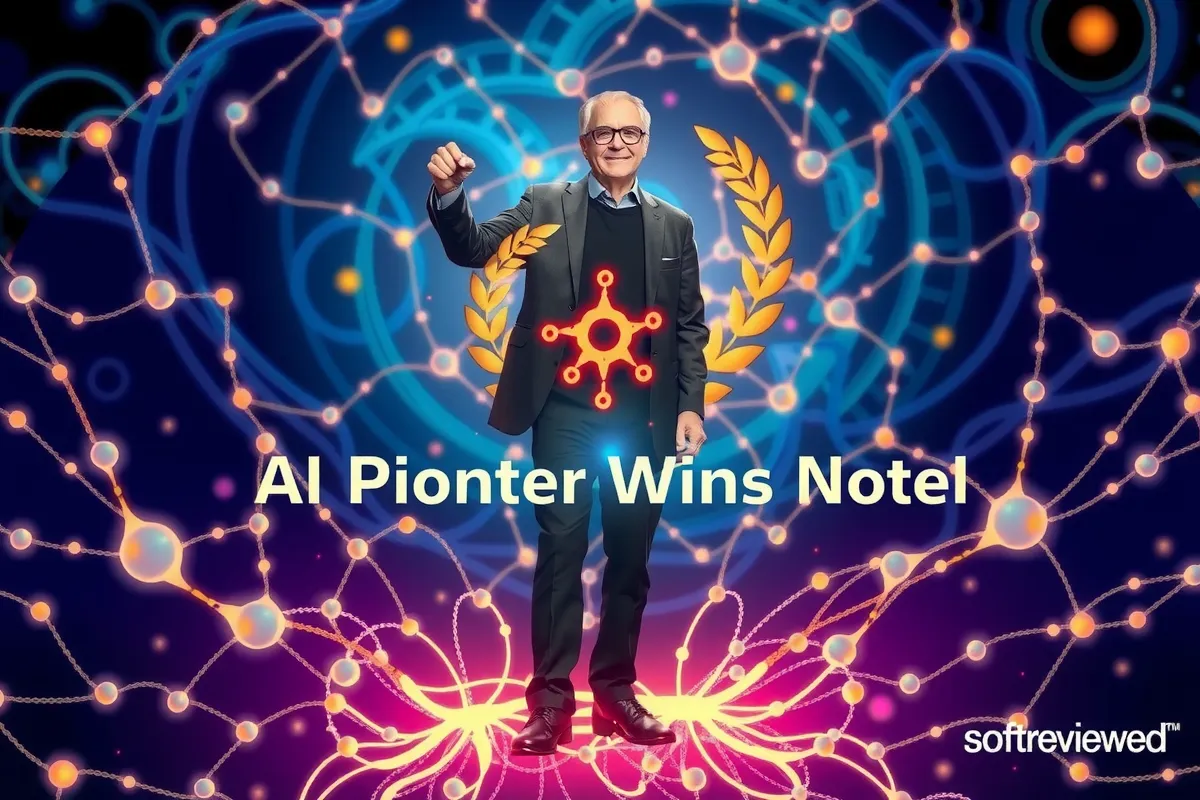
Geoffrey Hinton: A Pioneer in AI Research
Geoffrey Hinton is a name synonymous with the field of artificial intelligence. His journey in AI began in the 1980s when he worked on neural networks, a then-unfashionable approach to machine learning inspired by the human brain. Despite skepticism from many in the field, Hinton persisted in his belief that neural networks held the key to creating more intelligent machines.The 2024 Nobel Prize in Physics is not just a personal achievement, but also a recognition of the profound impact of Hinton's work on AI research.
Hinton's Breakthroughs in AI Research
The Royal Swedish Academy of Sciences has recognized Hinton's contributions to the development of artificial neural networks. Here are some key milestones in his journey:- 1980s: Hinton proposes the backpropagation algorithm, laying the foundation for neural networks to learn from their mistakes.
- 2000s: Hinton and his students demonstrate the power of deep learning in image recognition, paving the way for AI applications in various industries.
- 2010s: Deep learning techniques start to outperform traditional methods in various tasks, solidifying Hinton's position as a pioneer in AI research.
The Impact of Hinton's Work on AI Research
Hinton's work has far-reaching implications for the field of AI. Some key areas where his research has made a significant impact include:
- Computer Vision: Enabling machines to recognize objects in images
- Natural Language Processing: Powering language translation and text generation
- Speech Recognition: Improving voice assistants and transcription services
To learn more about Hinton's work and its impact on AI research, visit our article for an in-depth look.
The Risks and Challenges of AI Research
While Hinton's work has been groundbreaking, it has also raised concerns about the potential risks and challenges associated with AI development. Some of these concerns include:As AI continues to evolve, it is essential to consider both its potential benefits and risks.
- Job Displacement: The automation of jobs and the potential displacement of workers
- Bias and Discrimination: The potential for AI systems to perpetuate biases and discrimination
- Security Risks: The potential for AI systems to be used in malicious ways, such as cyber attacks
To learn more about the potential risks and challenges of AI research, visit our article for an in-depth look.
Conclusion
Geoffrey Hinton's 2024 Nobel Prize in Physics is a testament to the power of innovation and perseverance in AI research.
While Hinton's work has opened up new possibilities for AI applications, it has also raised important questions about the potential risks and challenges associated with AI development. As we move forward, it is essential to consider both the benefits and risks of AI research and to work towards creating more responsible and equitable AI systems.Read more on this groundbreaking topic by visiting the full article 🤖🎉


Comments
Post a Comment